

For more than 50 years after World War II, US corporate profits represented about 6% of annual Gross Domestic Product (GDP), rarely straying more than a percent or two from that level. This ratio was sometimes called the “most mean reverting series in all of finance”, because of its strong tendency to hover around that 6% level without exhibiting any clear trend. However, about 20 years ago, this stable ratio began climbing slowly, eventually reaching an all-time high of 12.8% in the 2nd quarter of 2021. Since then, profits as a percentage of GDP have remained elevated at roughly double their historical average of 6%. Does this indicate the dawning of a new era of profitability?
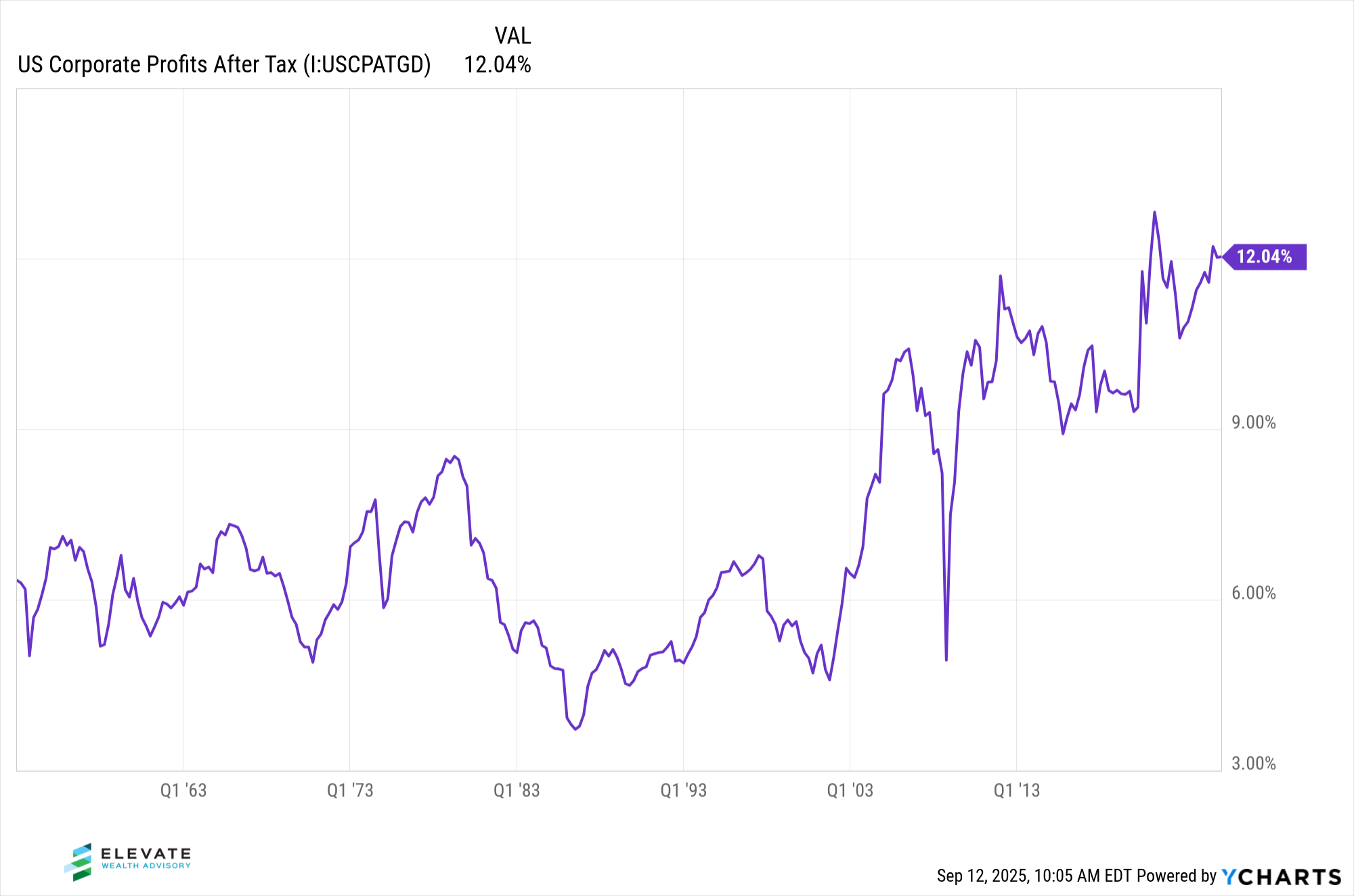
We can’t know for sure, but there are some fundamental changes that could explain this new trend. For one, the effective US corporate tax rate is near an all-time low today, having declined from about 50% in the early 1950s to only 15% today, boosting after-tax profits. Secondly, corporate borrowing costs declined dramatically from 1981 to 2021 (although they have risen recently). But a third factor may simply be the nature of today’s “mega cap” tech companies.
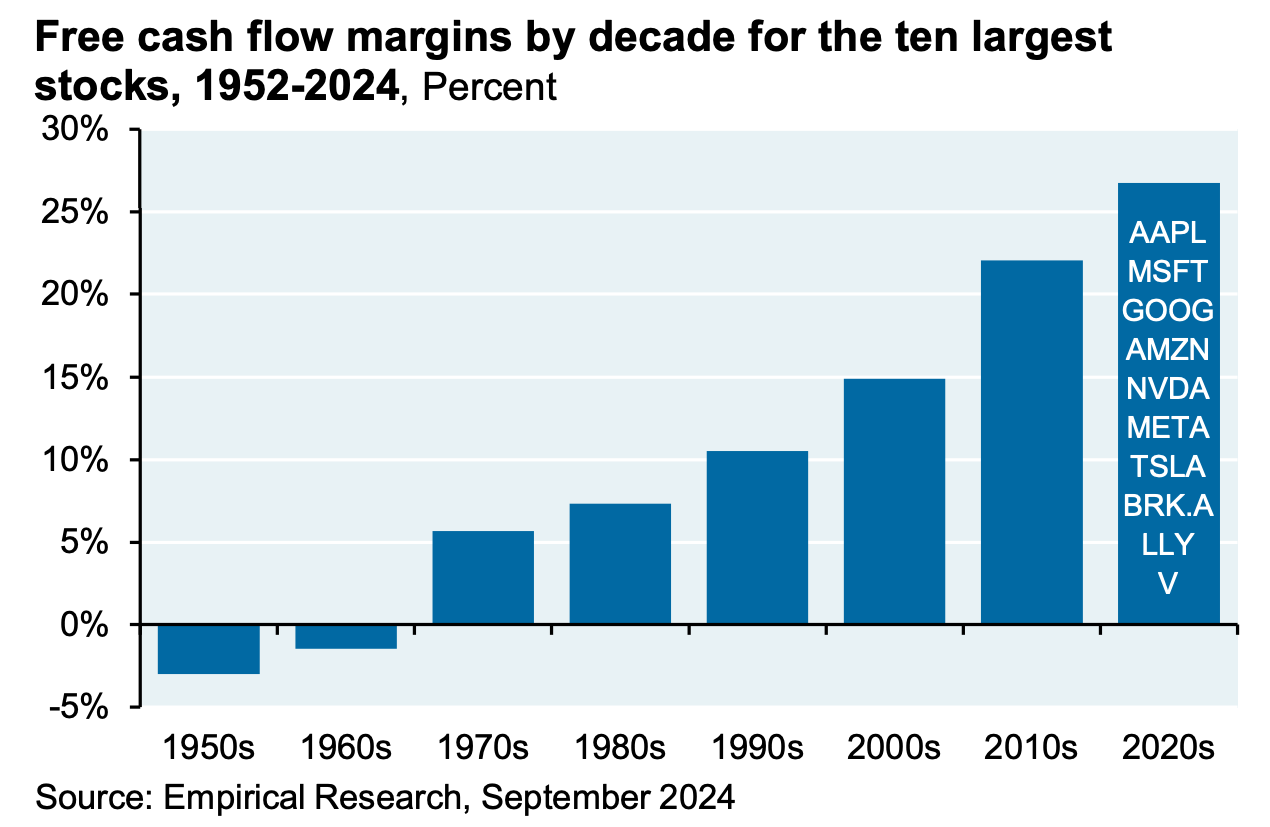
In prior eras, corporate profits were naturally limited by competition and the costs of scaling. But today’s large tech companies seem to have been able to generate enormous profits by “hyper-scaling” and have done so with fewer employees and fixed cost items like manufacturing plants, materials, and equipment. They have also become cash flow machines, breaking records for cash flow margins decade after decade:
At the same time that profitability has gone up, the frequency of recessions has gone down. In fact, since the Global Financial Crisis in 2008, the US has experienced only a single quarter of recession following the Covid-19 outbreak in 2020:

If this is also a new trend, not only are corporate profits higher, but one could argue that the fair price to pay for those profits is probably higher too, because fewer recessions would imply that profits are less exposed to significant downturns than in the past. Perhaps this is why we are seeing traditional measures of market valuation, like the ratio of US stock market capitalization to GDP, reaching record levels as well:
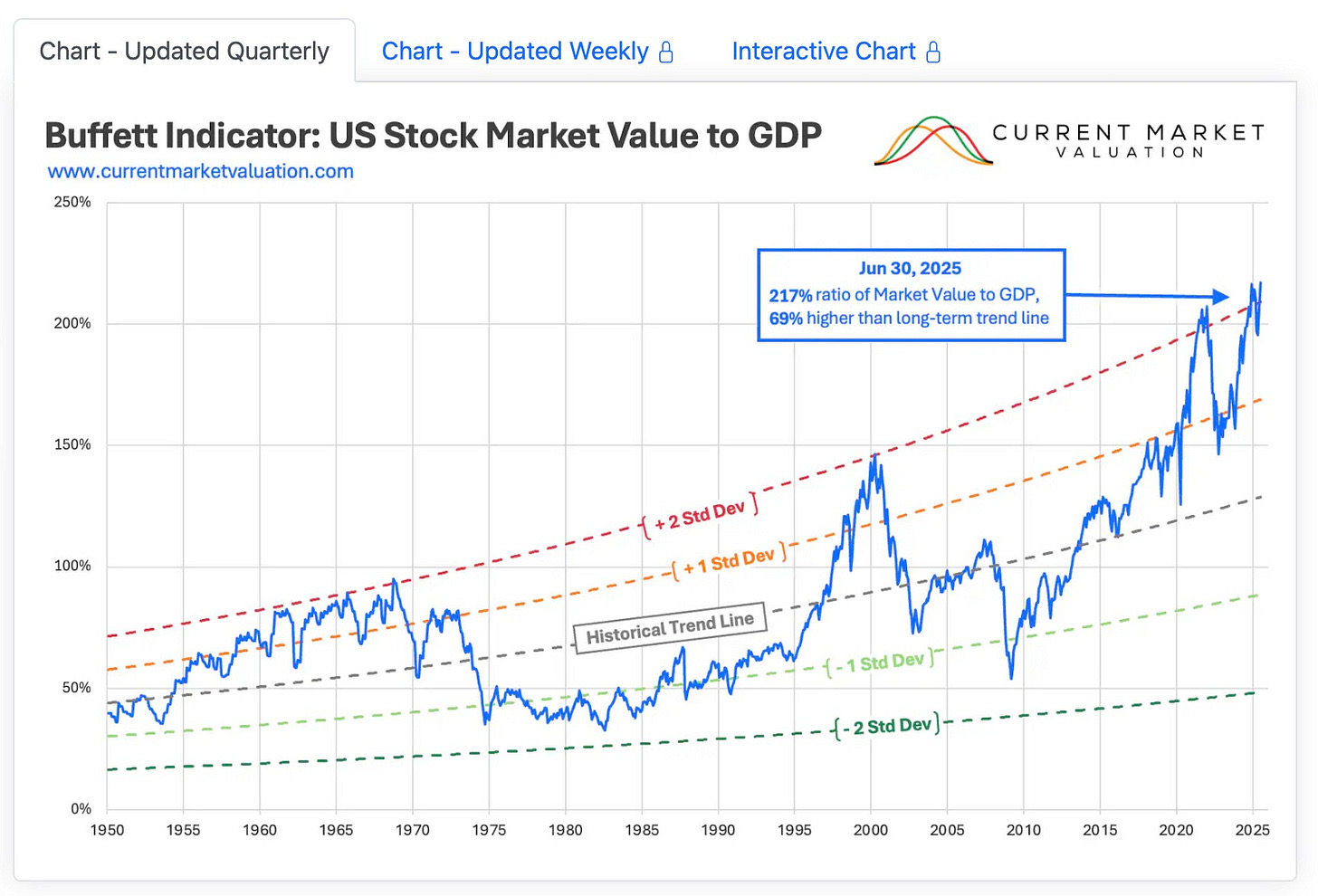
While intriguing, it’s important to note that this is all anecdotal evidence. There are no guarantees in markets and none of this proves that elevated levels of corporate profits and valuations are sustainable. As evidence-based investors, we know that the economy and markets are constantly evolving; not all changes will be favorable to investors. But it does mean that markets remain as unpredictable as ever and that trying to time your buys and sells using rules that worked in the past may just be an exercise in frustration. As always, taking a long-term view and aligning your portfolio with your personal goals and risk tolerance is likely to provide a better investment experience.
Sources:
https://www.officialdata.org/us/stocks/s-p-500/1947?amount=100&endYear=2025
Disclosure: The opinions expressed herein are those of Elevate Wealth Advisory (“EWA”) and are subject to change without notice. EWA reserves the right to modify its current investment strategies and techniques based on changing market dynamics or client needs. This should not be considered investment advice or an offer to sell any product. Past performance is no guarantee of future results. This contains forecasts, estimates, beliefs and/or similar information (“forward looking information”). Forward looking information is subject to inherent uncertainties and qualifications and is based on numerous assumptions, in each case whether or not identified herein. It is provided for informational purposes only and should not be considered a recommendation to buy or sell securities or a guarantee of future results. EWA is an independent investment adviser registered under the Investment Advisers Act of 1940, as amended. Registration does not imply a certain level of skill or training. More information about EWA, including our investment strategies, fees and objectives can be found in our ADV Part 2, and/or form CRS, which is available upon request.